
Your first visit
The hardest part of a vet visit happens at home, an hour before. Here is what you can do to make the trip easier for both of you.
A week before: the carrier becomes furniture
Take the carrier out of the cupboard and leave it open in the room your cat lives in, with a familiar towel inside. Put food or toys in it. A cat who only meets the carrier once a year, five minutes before something unpleasant, learns exactly what you would expect her to learn.
On the day
A carrier that opens from the top and comes apart in the middle makes the examination far gentler. Cover it with a towel on the way. Avoid feeding your cat for two or three hours beforehand if we are expecting bloodwork, but call us first to confirm.
What to bring
The health record if there is one, a list of current medication, the brand of food, and a fresh faecal sample if relevant. Make notes on your phone about what you have noticed and since when. Half of it gets forgotten in the room.
What happens here
The carrier goes up onto the shelf, at height. We wait a few minutes in the consult room without touching your cat. We open the carrier door and let her come out on her own. If she does not, we take the top off and examine her there.
How long it takes
At least 30 minutes for a consultation. A first visit usually uses the whole slot and sometimes more, because it includes a full history and because we do not hurry a cat we are meeting for the first time.
Getting home
If there are other cats at home, the smell of the practice can cause conflict on the way back. Let your cat come out of the carrier by herself, in her own room, and give them all a few hours. If the tension lasts, call us.
What you'll find when you arrive
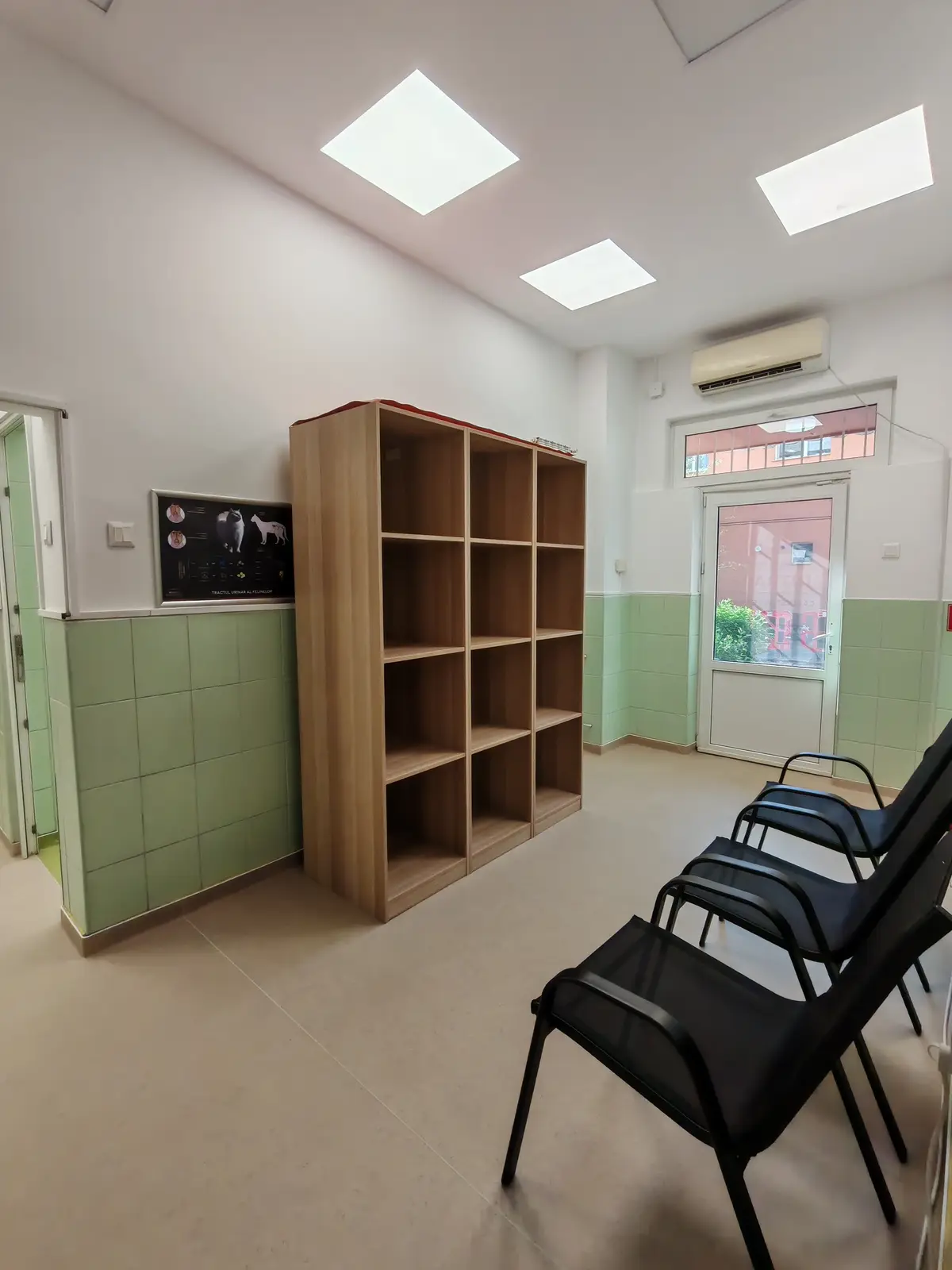
The cats' entrance, at the back. A separate door and a separate waiting room — your cat never crosses the dogs' side. 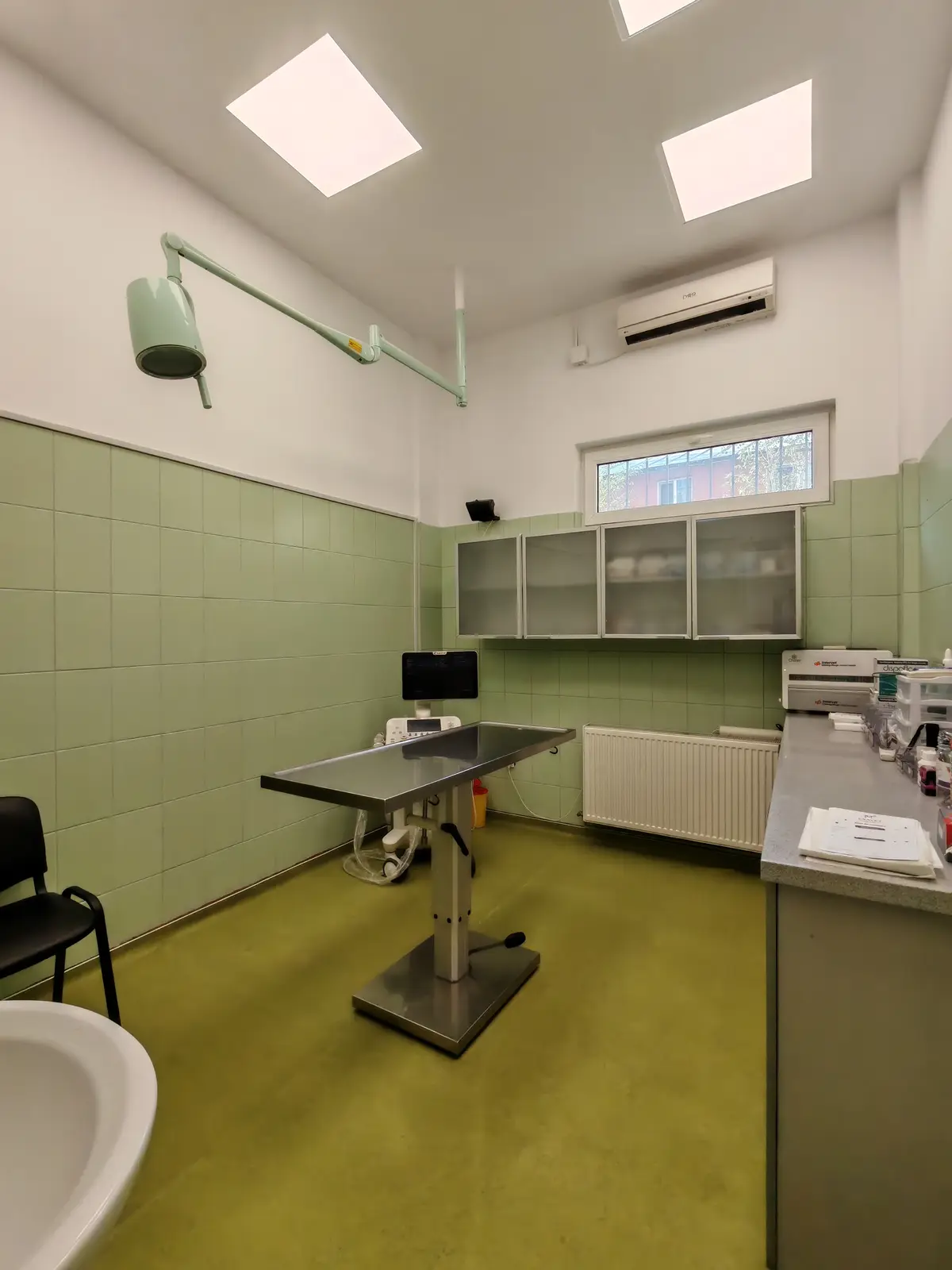
The consulting room, with the ultrasound scanner in the same room.